

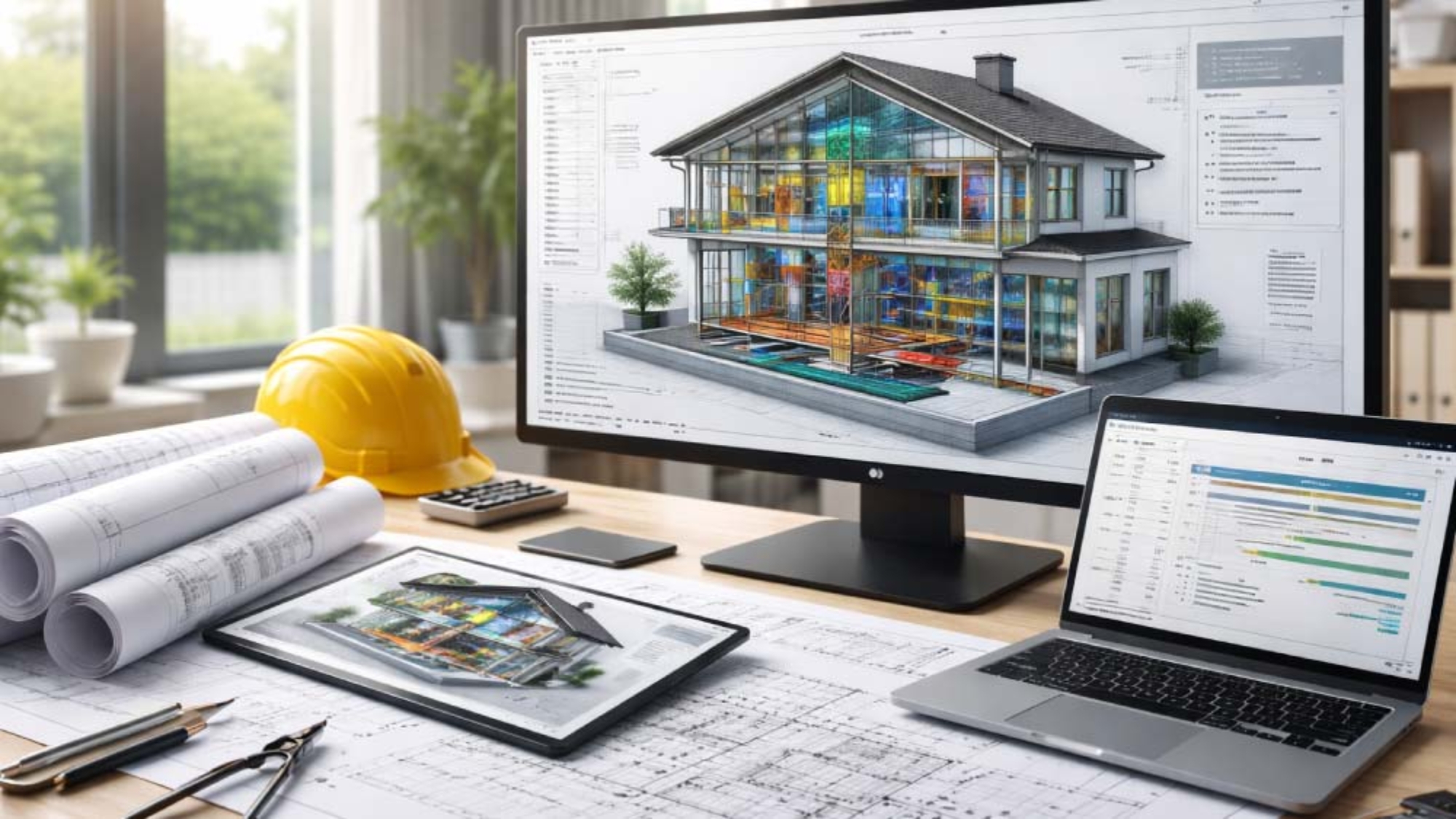
BIM and digital tools: a major asset for construction management in 2026
In 2026, BIM construction management has become a strategic tool for designing, coordinating and securing construction projects. More than a 3D model, BIM reshapes collaboration across the building sector.
1) BIM: more than a 3D model
BIM construction management (Building Information Modeling) relies on a smart digital model that centralizes all project data: architecture, structure, systems, materials, energy performance and costs. Any change is instantly shared among stakeholders.
2) Greater reliability during design and permitting
With BIM construction management, design phases become more accurate. Technical choices are simulated early, reducing last-minute changes before building permits.
3) Better cost and schedule control
One of the key advantages of BIM construction management is financial control. Quantities are more precise, budgets are clearer and construction timelines are better respected.
4) Improved client communication
BIM provides clear visualizations that help clients understand and validate their projects, increasing transparency and confidence throughout the process.
5) The evolving role of the construction manager
In 2026, construction managers act as digital coordinators, ensuring data consistency and long-term project quality.